

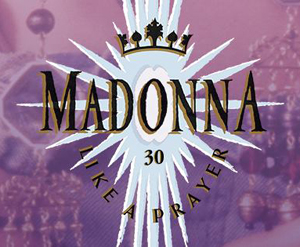
 By the time it was released in 1989, Madonna was already a bona fide superstar. Thirty years after its release, we look back at the album that established her as a meaningful artist
Madonna was already a superstar before she released Like a Prayer, which turns 30 years old this week. She had produced at least half-a-dozen era-defining hits (“Holiday,” “Like a Virgin,” “Material Girl,” “Into the Groove,” “Papa Don’t Preach,” and “La Isla Bonita”), and her previous album, 1986’s True Blue, had sold more than 25 million copies. But, in a way, she was also strangely underrated. When Like a Prayer came out in 1989, six years after she hit the ground running with her infectious debut single, “Everybody,” critics lauded Madonna for changing our conceptions around how a female pop singer could present herself and conduct her career. But they didn’t necessarily regard her as a “great artist.”
“Critics flock to her uneven product the way liberal arts magnas flock to investment banking,” Robert Christgau, the self-styled “Dean of American Rock Critics,” wrote in his review of True Blue. “So desperate are they to connect to a zeitgeist that has nothing to do with them that they decide a little glamour and the right numbers add up to meaningful work, or at least ‘fun.’”
Like a Prayer certainly confirmed Madonna’s flair for fun; with its kindergarten-friendly lyrics about “pink elephants and lemonade” and treacle-sweet, Beatles-y psychedelia, “Dear Jessie” remains one of her most charming singles. But the album as a whole, Madonna’s first undisputed masterpiece, also proved once and for all that she was a meaningful artist, not just an uncommonly savvy and driven pop star. She bared her navel on the album’s cover, and her soul in its songs.
Even three decades later, it’s difficult to separate the album from the scandal that surrounded its release. When the brilliantly provocative “Like a Prayer” video debuted in February 1989, just a day after the release of a high-profile Pepsi commercial starring Madonna, the Vatican and various religious groups condemned the clip for including allegedly blasphemous imagery. Here was Madonna dancing in front of burning crosses, kissing a Black Saint, and displaying what looked like stigmata on her palms.
Read full article at Noisey
